Introduction: Why Backyard Poultry Systems Are Increasingly Adopted
Backyard poultry keeping has become more widely explored as a practical approach to improving household food resilience, reducing dependence on commercial egg supply chains, and supporting more sustainable living practices. A well-designed chicken coop system can also provide educational value, particularly in understanding animal care, resource cycles, and basic agricultural engineering principles.
In addition to food production, structured backyard poultry systems can help address several common challenges: fluctuating food prices, limited access to fresh eggs in certain environments, and the desire for more controlled, hygienic food sources. When properly designed, such systems also reduce daily labor requirements through automation-inspired DIY solutions and careful spatial planning.
The following sections outline a complete functional design for a small flock environment, focusing on feeding efficiency, water delivery, housing structure, sanitation control, predator protection, ventilation, and behavioral enrichment. The goal is to present a cohesive, practical framework that minimizes waste, reduces maintenance effort, and maintains a healthy living environment for poultry.
System Overview: Integrated Coop and Run Design
A successful backyard poultry system typically combines two connected components: a protected indoor coop for roosting and laying, and an outdoor run for movement, foraging, and environmental enrichment.
The run structure is generally rectangular and constructed using a simple timber frame. A common configuration includes pressure-stable posts embedded into the ground for structural integrity, connected by horizontal framing members. The enclosure is covered with durable roofing material to prevent rain intrusion and reduce mud formation inside the run.
Maintaining a dry environment is a critical design principle. Excess moisture inside poultry enclosures often leads to odor buildup, increased bacterial activity, and deteriorating bedding conditions. By contrast, a dry environment naturally reduces smell, improves hygiene, and supports healthier litter decomposition processes.
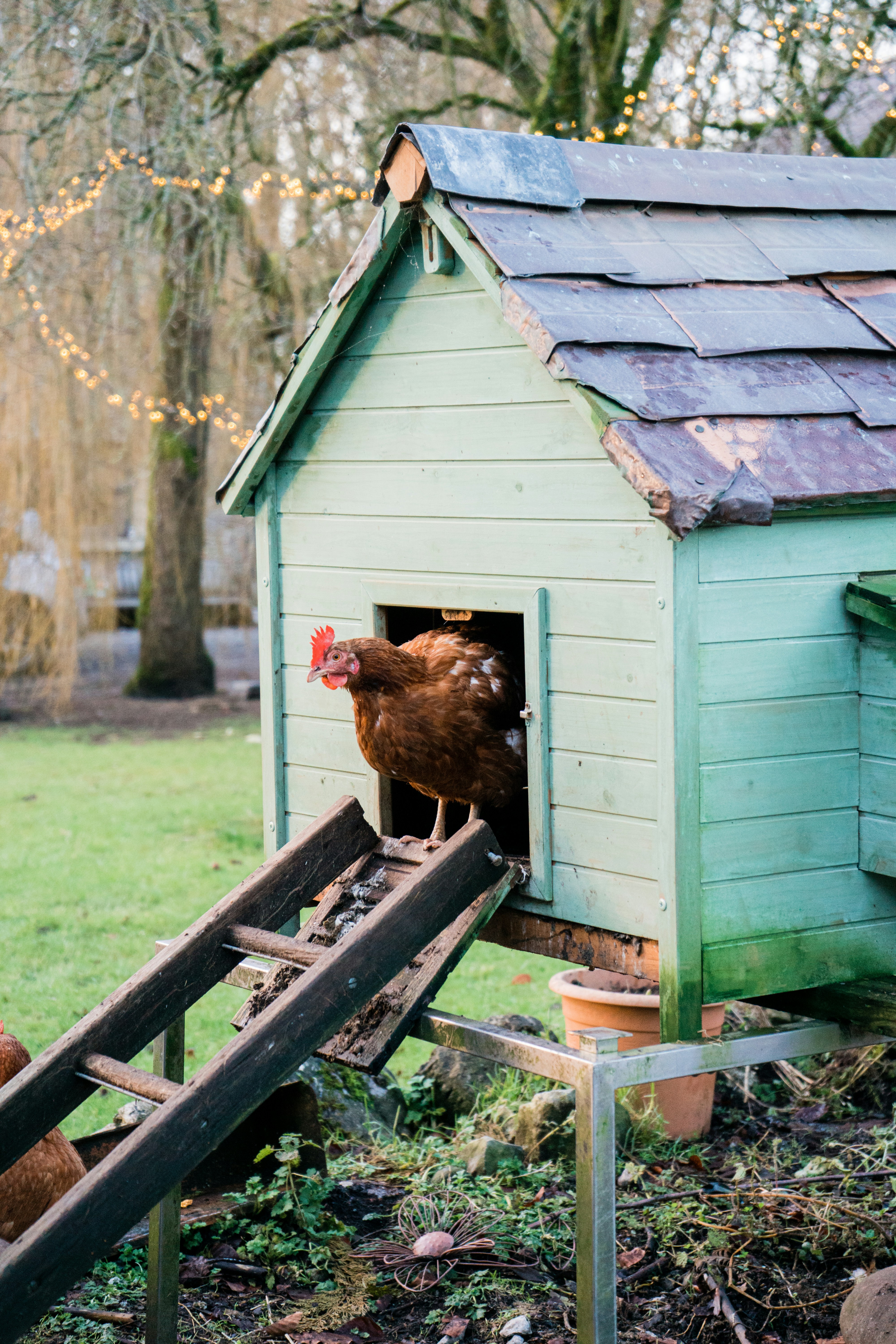
The coop is typically attached directly to the run, allowing chickens to move freely between sheltered and open areas while remaining secure from external threats.
Efficient Feeding System Using Vertical Gravity Distribution
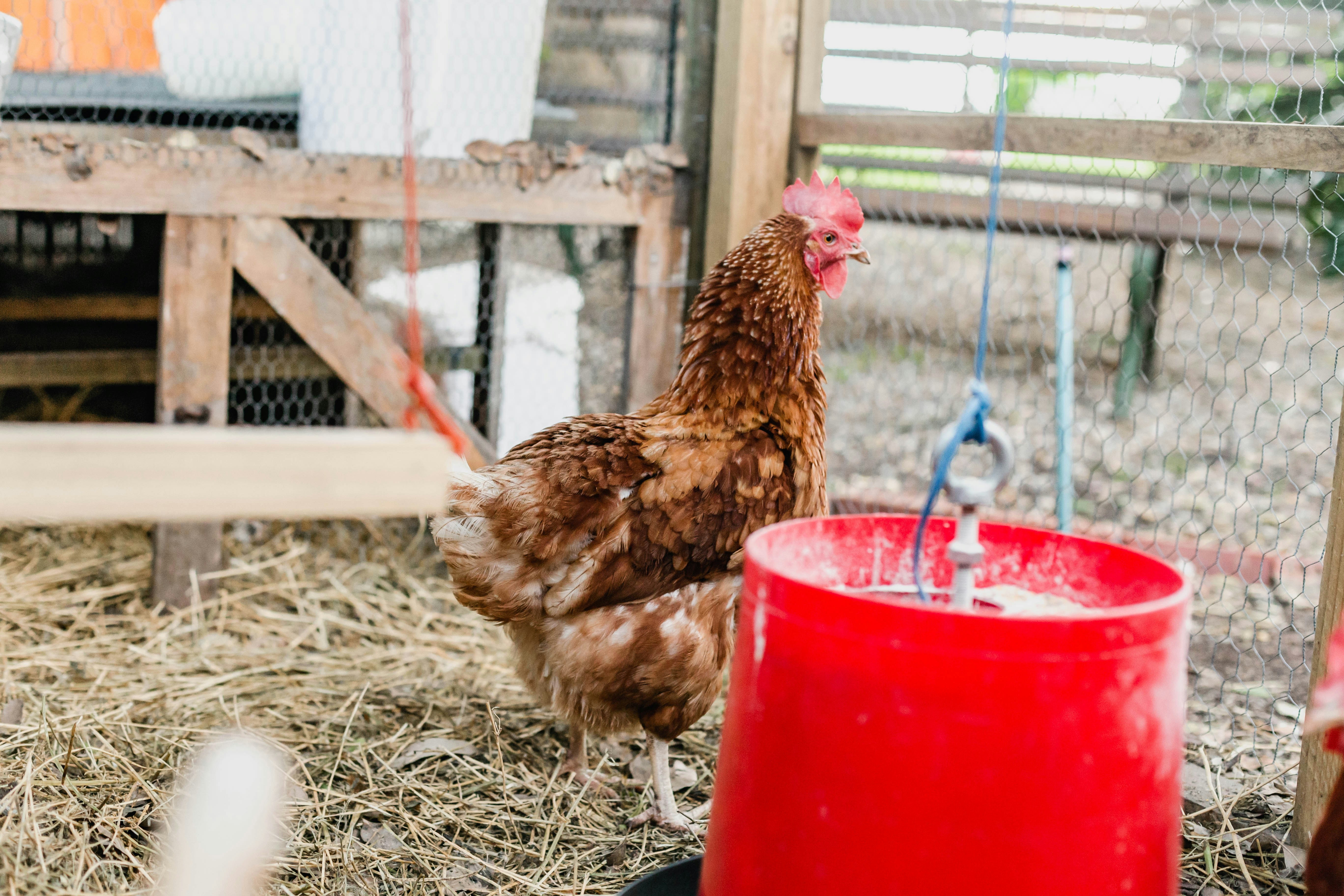
One of the most efficient feeding approaches in small-scale poultry systems involves vertical gravity-fed distribution tubes made from rigid cylindrical piping. These tubes are installed vertically along the enclosure wall and filled from the top, allowing feed to gradually descend by gravity.
Design Concept
The system typically uses three-inch diameter vertical feed columns. Each column is sealed at the top with a protective cap to prevent moisture intrusion and contamination. Feed is poured directly into the top opening and stored inside the vertical chamber.
At the lower section, a modified outlet is created using a branching connector that directs feed into a controlled opening. A partial bottom cap or cut barrier is installed to prevent excessive spillage onto the ground.
Functional Advantages
This system reduces feed waste significantly compared to open trays or ground feeding methods. Chickens naturally tend to scratch and scatter loose feed, which leads to contamination and loss. By restricting access to controlled openings, feed remains contained while still accessible.
Another advantage is reduced refill frequency. Because each tube stores a substantial volume of feed, replenishment intervals can extend over multiple days or even weeks depending on flock size.
Assembly Considerations
The piping system is secured firmly to the enclosure frame at both upper and lower points. This prevents tipping or loosening due to animal interaction. The internal layout can be adjusted based on enclosure size, and multiple vertical columns can be installed to distribute feeding access evenly across the flock.
Water Delivery System with Reservoir and Nipple Dispensing
A reliable water supply system is essential for poultry health, particularly in warmer climates or enclosed environments. A commonly used approach involves a sealed reservoir connected to a gravity-fed distribution line.
Reservoir Structure
A closed container functions as the primary water storage unit. Water is introduced through a fill line connected to an external access pipe. This allows refilling without entering the enclosure, improving convenience and minimizing disturbance.
The system is designed so that water fills until it reaches equilibrium, after which excess flow is regulated by the internal pressure balance of the container system.
Dispensing Mechanism
Water is delivered to chickens through small mechanical nipple valves installed along a lower distribution pipe. These valves release water when activated by pecking motion. The system reduces contamination compared to open bowls, as water is not exposed to bedding, droppings, or debris.
Chickens typically learn quickly how to operate the valves through trial behavior. Minor leakage may occur, but it is generally minimal and does not significantly affect water levels.
Benefits
This approach allows water to remain clean for extended periods, often lasting more than a week before refilling is necessary. It also reduces evaporation and spillage, contributing to a more hygienic enclosure environment.
Structural Design: Coop and Run Construction Principles
The structural framework of a poultry enclosure is typically constructed using standard dimensional lumber arranged in a simple rectangular geometry. Vertical posts are embedded into the ground to provide stability, while horizontal beams define the perimeter and support roof loads.
Roofing System
A transparent or semi-transparent roofing layer is often installed over the run. This allows natural light penetration while protecting the interior from rainfall. The roof is typically sloped to direct water runoff away from the enclosure.
Maintaining dryness inside the enclosure is essential not only for odor control but also for preserving the integrity of bedding material and wooden components.
Entry and Access Points
A large access gate is incorporated into the run for maintenance and cleaning purposes. The gate is designed with a simple frame-and-panel structure and secured using a basic latch mechanism. Internal and external access controls may be included to allow entry from both sides.
Predator Protection and Ground Security Strategy
Protecting poultry from predators is a critical design requirement. Standard lightweight wire mesh is often insufficient due to its vulnerability to tearing or bending. Instead, a reinforced metal mesh material is used throughout the enclosure.
Mesh Installation
The reinforced mesh is attached along all enclosure surfaces using heavy-duty fasteners. It is also extended slightly into the ground to reduce the risk of digging predators entering from below.
Perimeter Hardening
The perimeter of the enclosure is reinforced using solid stone or paved materials. This creates a physical barrier that discourages burrowing and prevents soil disturbance near the base of the structure.
Additionally, plastic barrier sheets may be installed along lower sections of the enclosure interior. These sheets serve to contain scattered bedding and prevent loose soil or debris from being pushed outside the designated area.
Flooring System: Deep Litter Composting Approach
Inside the coop, a deep litter system is commonly used to manage waste and bedding decomposition. This method involves layering absorbent organic material such as wood shavings to a significant depth.
Process Function
Waste material accumulates gradually within the bedding layer. Over time, microbial activity breaks down organic matter into compost-like material. Periodic turning of the litter helps accelerate decomposition and maintain airflow within the bedding.
Moisture Isolation
A waterproof liner is often installed beneath the bedding layer. This prevents moisture from penetrating structural wood components and significantly extends the lifespan of the coop base. The liner effectively creates a sealed tray-like environment that contains all organic material.
Maintenance Cycle
Rather than frequent full cleanouts, maintenance is performed by periodic agitation and spot removal of concentrated waste areas, particularly beneath roosting zones.
Nesting Box Design and Egg Collection System
Nesting areas are designed to provide privacy, structure, and consistency for egg-laying behavior. A modular approach using crate-style compartments is commonly adopted.
Structural Layout
Multiple box units are arranged side by side with internal dividers to reduce disturbance between hens. Each compartment is partially enclosed to create a darker, more secure environment, which encourages consistent laying behavior.
Behavioral Conditioning
Artificial egg substitutes may be placed inside nesting compartments to encourage hens to lay eggs in designated areas. These dummy eggs help establish consistent nesting patterns during early adaptation phases.
Access for Collection
External access panels allow eggs to be collected without entering the coop interior, reducing stress to the flock and improving hygiene during collection routines.
Roosting Areas and Environmental Enrichment
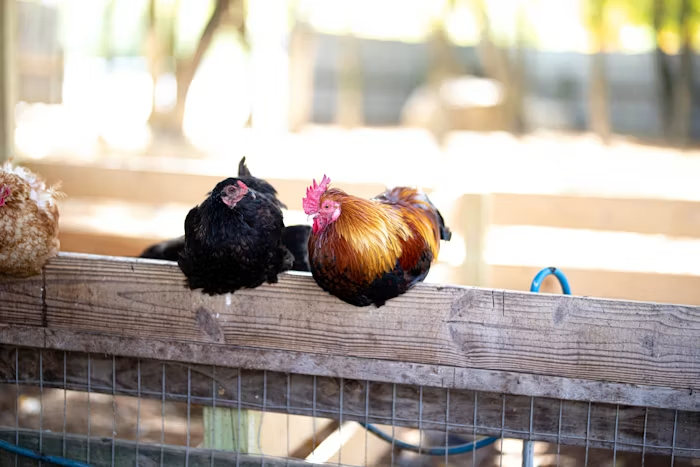
Roosting structures provide elevated resting spaces for chickens during inactive periods. These perches are typically constructed from simple wooden beams positioned at varying heights.
Placement Considerations
Roosts are positioned to balance comfort and cleanliness. Improper placement can result in waste accumulation in undesired areas, so spacing and orientation are important design factors.
Enrichment Elements
Additional environmental features such as dust-bathing containers, logs, and elevated platforms improve behavioral health. Dust bathing areas support natural grooming behavior, while varied textures and objects reduce boredom and encourage movement.
Access Design and Maintenance Efficiency
Efficient maintenance requires easy access to the interior of both coop and run. Large hinged panels are commonly used to allow full interior reach for cleaning or bedding replacement.
A wheelbarrow-access door can be integrated at ground level, enabling direct removal of waste material without manual carrying. This design significantly reduces labor during deep cleaning cycles.
Ventilation and Thermal Regulation
Proper airflow is essential for maintaining healthy internal conditions. Ventilation openings are placed at multiple heights to encourage continuous air exchange while avoiding direct drafts on resting birds.
During hot seasons, additional shade structures may be installed on sun-exposed sides of the enclosure. These reduce heat buildup caused by prolonged sunlight exposure, particularly in west-facing installations where afternoon temperatures are highest.
Strategic placement of the entire structure under partial natural shade further improves temperature stability.
Ramp Design for Safe Movement
Access ramps between ground level and coop entrances are constructed with textured surfaces to prevent slipping. This is achieved by creating repeated grooves along the ramp surface, allowing secure footing for birds moving between levels.
Maintenance Schedule and Operational Routine
Routine management typically includes daily feed and water checks, regular egg collection, and periodic bedding agitation. Full cleanouts are infrequent when deep litter systems are used effectively.
Waste accumulation is managed through continuous decomposition rather than complete removal, significantly reducing workload over time.
Conclusion: Principles of Efficient Small-Scale Poultry Systems
A well-designed backyard poultry system relies on a combination of structural simplicity, functional automation, and environmental control. Key elements include gravity-fed feeding systems, sealed water distribution, reinforced predator protection, compost-based bedding management, and well-ventilated housing design.
When these systems are integrated effectively, the result is a stable, low-maintenance environment that supports poultry health, reduces resource waste, and maintains consistent egg production while minimizing daily labor requirements.