What Is a DIY Fan
"DIY" stands for "do it yourself," so a diy fan is simply a fan you build yourself from a few basic parts instead of buying a finished one. It is one of the most beginner-friendly electronics projects there is, because a working fan needs only a small motor, a blade, and a power source. That simplicity makes it a favourite first project for hobbyists, students, and anyone who wants a cheap, custom way to move some air.
People build their own fans for all sorts of reasons: to cool a desk or a stuffy room, to learn a little about motors and circuits, to make something portable for camping or travel, or as a fun STEM activity with kids. The scale runs from a tiny USB fan clipped to a laptop to a repurposed motor spinning a homemade blade.
This article explains what a DIY fan is, how a fan actually works, the common types you can build, a simple step-by-step build, how to power it, and the safety points to keep in mind whenever a spinning blade is involved.
How a Fan Works
A fan is one of the simplest machines around. An electric motor spins a shaft, a blade attached to that shaft pushes against the air as it turns, and the angled blades throw air in one direction, creating the breeze you feel. Everything else, the housing, the switch, the base, just supports and controls that basic action.
The two parts that matter most are the motor and the blade. The motor needs a power source at the right voltage to spin freely, and the blade needs to be balanced and angled so it moves air efficiently without wobbling. Get those two right and you have a working fan; the rest is about making it safe, stable, and convenient to use.
Common DIY Fan Types
DIY fans come in a handful of familiar forms, differing mainly in the motor and power source they use.
A small DC motor and blade powered straight from a USB port or power bank. It is the simplest build, needs no separate power supply, and is perfect for a desk, a laptop bag, or travel. USB delivers a safe low voltage, which makes it especially beginner-friendly.
A computer case fan already contains a balanced blade, a quiet motor, and a housing, so wiring one to a suitable low-voltage supply gives a tidy, near-silent fan with almost no fabrication. It is a popular way to reuse spare parts and get a clean result quickly.
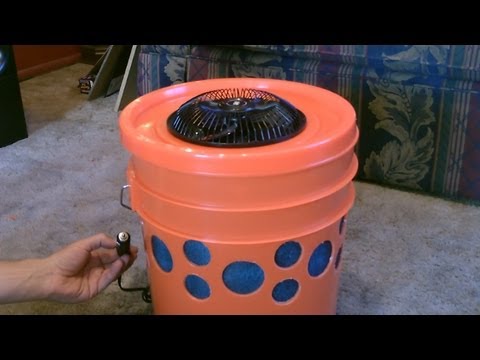
A small DC motor, a battery holder, and a homemade blade, often cut from card, plastic, or foam, make the classic craft-and-STEM fan. It teaches the basics of circuits and balance, and it is a great hands-on project to build with kids using low-voltage batteries.
Wire a small solar panel to a matching motor and the fan runs on sunlight alone, no batteries or mains needed. It is ideal for outdoor use, a greenhouse, a shed, or a sunny window, and a neat way to learn about solar power, though it only spins when the sun is out.
Building a Simple Mini Fan
Here is the general process for the most common build, a small USB or battery-powered fan. The exact parts vary, but the sequence is always the same.
- 1Attach a balanced blade firmly to the motor shaft so it spins true without wobbling.
- 2Connect the motor to a USB lead or battery holder, wiring a switch into the circuit.
- 3Match the power source to the motor's rated voltage so it runs safely and does not overheat.
- 4Secure the motor to a stable base so the fan does not tip over or vibrate loose.
- 5Fit a guard or cage around the blade before you switch it on.
Choosing a Power Source
How you power a DIY fan shapes where and how you can use it, and the golden rule is to match the supply to the motor's voltage.
For anything involving mains electricity, leave it to ready-made appliances or an experienced adult; the DIY builds here are designed around safe low-voltage power like USB, batteries, and small solar panels.
Safety Tips
A fan has moving parts and a live circuit, so a few precautions keep the project safe and enjoyable.
- 1Always fit a guard or cage around the blade so fingers, hair, and loose clothing stay clear of it.
- 2Secure the blade to the shaft and the motor to the base, so nothing flies off or tips over when running.
- 3Match the voltage and keep wiring tidy and insulated to avoid overheating or shorts.
- 4Keep the fan away from water, and supervise young children closely if it is a kids' project.
Why Build Your Own Fan
The reasons are a mix of practical and fun. It is cheap, since a basic fan can be built from a motor and spare parts for very little. It is customisable, so you can size it, power it, and shape it to fit a desk, a bag, a tent, or a greenhouse exactly. And it is a genuinely rewarding way to learn, teaching the fundamentals of motors, circuits, and even solar power in a single afternoon. For many people the real payoff is that a simple pile of parts becomes something that actually works and cools you down, which is what makes a DIY fan such a satisfying little build.
Frequently Asked Questions
Conclusion
A DIY fan is about as approachable as electronics projects get: a motor, a blade, and a power source are all it takes to build something that genuinely moves air. Whether you go for a USB mini fan on your desk, a quiet PC fan build, a battery-powered craft fan, or a solar fan for the garden, the principles are the same, balance the blade, match the voltage, mount it securely, and always fit a guard. Cheap, customisable, and a great way to learn how motors and circuits work, a homemade fan turns a handful of simple parts into a cool breeze whenever you need one.