What Comes in Your Kit
So you've seen those sparkly diamond art kits popping up everywhere and you're wondering what the heck they actually are. I get it. When I first started, I had no idea what I was getting into. Let me break down exactly what diamond painting is and how it works.
Every diamond painting kit comes with the same three essentials:
- The canvas – this is where you stick the diamonds
- The diamonds – we call them "drills" in the community
- The tool kit – how you actually place the drills
Understanding Your Canvas
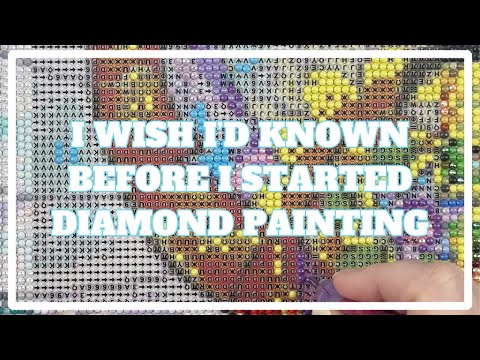
Take a close look at your canvas. You'll see a bunch of tiny colored squares covered in symbols. Those symbols tell you exactly which color drill goes where.
Look for the key – it's usually printed right on the side of the canvas. Some kits include a separate handout. For example, Diamond Art Club kits come with little stickers you can use as a reference.
Here's how it works: Say you see a black square with a white circle dot. You find that symbol on the key, and it tells you the number – let's say 310. Then you find your bag of drills labeled 310, and you fill in those squares.
The Drills Themselves
Flip a drill over, and you'll see a number on the back. That number matches the key on your canvas. So for those black squares with the circle dot? You'd grab 310. White T? That's 608. Y? 606. You work section by section, matching each symbol to its corresponding drill number.
When you're done, instead of a flat picture, every square is filled with a faceted diamond. The image pops, it's vibrant, and it has actual texture. Looks really cool.
Your Tool Kit
Every kit comes with a few basic tools. The exact ones vary by company, but here's what you'll typically get:
The diamond painting pen – this is how you pick up and place drills. The tip is hollow, and you load it with wax.
The pink wax – peel off the protective layer, then press the pen tip straight down into the wax. Give it a little twist and pull up. If you did it right, there's now sticky wax in the tip. You might need to mess around with how much wax you use – that's normal.
The tray – pour your drills onto the tray and shake it side to side until they all lay flat. This makes it way easier to pick them up.
Some kits also include tweezers, which are great for adjusting drills or fixing mistakes. If your kit doesn't have them, grab a pair from Amazon – they're cheap and worth it.
How the Canvas Sticks
The canvas itself is sticky. There's a clear film on top that protects the adhesive. When you peel it back, the surface underneath is tacky. That's what holds your drills in place.
Only peel back the section you're working on. If you peel the whole thing at once, dust and pet hair will stick to it and the glue will lose its stickiness.
Let's Actually Place a Drill
- Find your symbol on the canvas and the corresponding drill number
- Shake a few drills onto your tray until they're lying flat
- Load your pen with wax
- Press the pen tip onto the top of a drill – it should stick
- Place the drill onto the matching square on the canvas
- Press down gently so it sticks
Keep filling in all the squares of that color, then move to the next one.
Square vs. Round Drills
You've got two options for drill shape, and this is mostly personal preference.
Square drills fit snugly next to each other with no gaps. They nestle together and kind of keep each other straight. I find them satisfying because everything lines up perfectly. They also tend to produce more detail and a sharper image.
Round drills leave a small gap between each one since they're circles. They're supposed to give off more sparkle and be faster to work with. Some people say they're easier for beginners.
I started with round and moved to square. Try both and see what you like.
What a Finished Canvas Looks Like
I brought out one I'm currently working on – it's a trolley car. The part that's still sticky has the symbols showing through. The section I've filled in? That's where the image is starting to come together.
Here's the thing about diamond paintings – the further back you stand, the better they look. It's basically a pixelated picture. The bigger the canvas, the clearer the detail. But if you're just starting out, grab a small one first to make sure you enjoy the process before committing to a massive project.
That's the basics. There's more to learn – drill storage, how to keep your drills straight, choosing the right size – but this is enough to get you started. Grab a kit and give it a try.