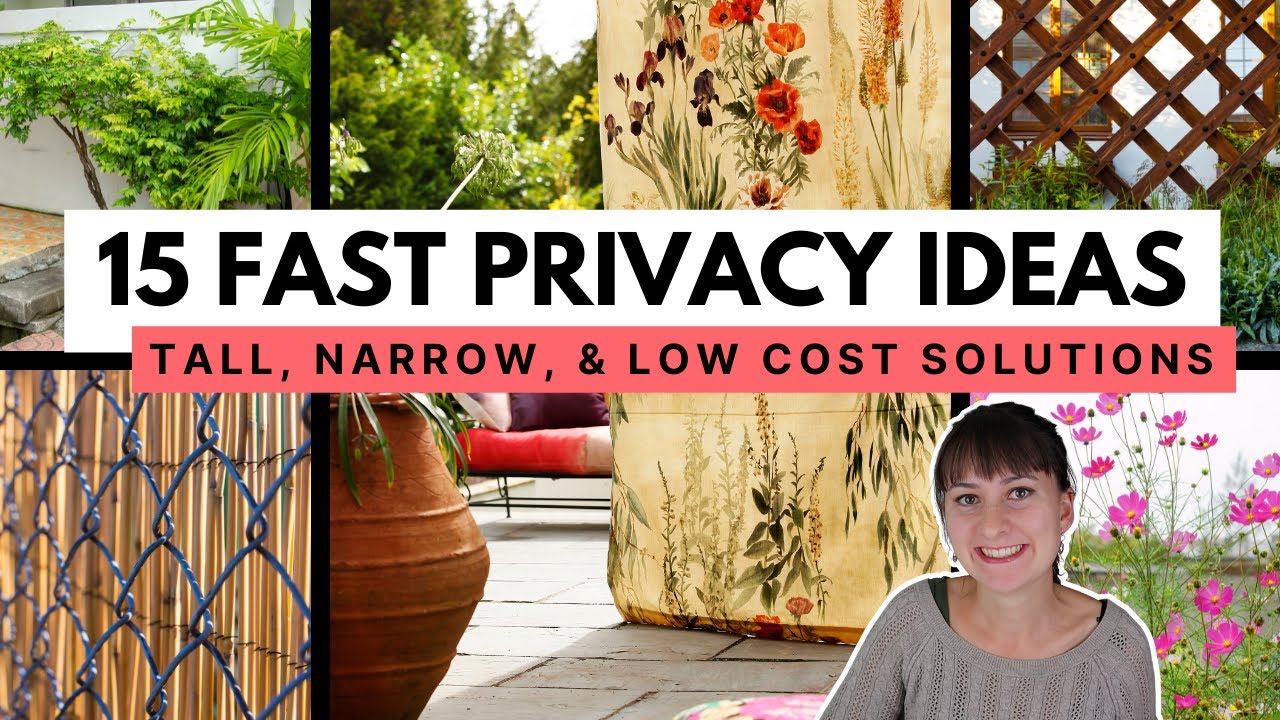
Creative DIY Privacy Solutions for Your Yard
Okay, here is the DIY tutorial article based on the video transcript you provided.
Are you looking for fast, affordable, and unique ways to create privacy in your yard? While fences and hedges are great, there are many creative alternatives that can be adapted to any space or budget. This guide will walk you through several ideas that go beyond the basics, helping you create a private outdoor oasis.
What You'll Need
The materials you'll need depend on the specific project you choose. Here is a general list of common items used in these projects:
- Frames & Structures:
- Bamboo poles or thick sticks
- Heavy-duty zip ties
- PVC pipes or metal conduit
- Pop-up canopy or pergola kit
- Cattle panels (from farm stores)
- Privacy Screens & Panels:
- Wooden privacy panels or lattice
- Bamboo roll fencing or bamboo mats
- Old wooden doors or pallets
- Outdoor fabric or curtains
- Waterproofing spray (for fabric)
- Plants:
- Fast-growing vines (e.g., clematis, grapevine, evergreen vine)
- Ornamental grasses (tall varieties)
- Annuals (e.g., sunflowers, cosmos, scarlet runner beans)
- Bamboo (clumping or running, in containers)
- Tall narrow shrubs or trees (e.g., arborvitae)
- Tools:
- Stakes (wood or metal)
- Mallet or hammer
- Scissors or utility knife
- Screws, nails, or wire
- Curtain rod and rings (for outdoor curtains)
- Large containers or pots (for container gardening)
Step-by-Step Guide
Here are several creative privacy solutions you can build in your yard.
#### ## 1. Prioritize and Frame Your Seating Area
The most effective privacy is often the one closest to you. Start by identifying your main seating areas, like a deck or patio.
- Step 1: Choose your main seating area. This is where you spend the most time and need privacy the most.
- Step 2: Create a frame or structure overhead. This is the foundation for many privacy solutions. You can:
- Buy a simple pop-up canopy.
- Build a frame from bamboo poles or sticks, securing them with zip ties.
- Assemble a pergola kit or build one from lumber.
- Step 3: Use this frame as a mounting point. Once you have a structure, you can easily hang curtains, bamboo mats, or even lightweight panels from it to enclose one or more sides.
#### ## 2. Build a Low-Cost Cattle Panel Trellis
Cattle panels are a fantastic, inexpensive way to create an instant frame for privacy, especially for vines or fabric.
- Step 1: Purchase a cattle panel from a farm supply store. These are large, wire mesh panels.
- Step 2: Secure the panel upright. Drive metal or wooden stakes into the ground and use heavy-duty zip ties or wire to attach the panel to the stakes.
- Step 3: Add your privacy element. The open panel itself provides no privacy, but it is a perfect frame for:
- Growing fast-growing vines up the wire.
- Zip-tying bamboo mats or fabric to the panel.
- Hanging lightweight art or outdoor curtains.
#### ## 3. Hang Outdoor Curtains for Flexible Privacy
Outdoor curtains are an underutilized and versatile privacy solution. They can be easily put up, taken down, and moved.
- Step 1: Create a sturdy rod. Use a tension rod for a light application, or install a permanent curtain rod under a pergola, awning, or on a fence.
- Step 2: Choose your curtain material. Options include:
- Waterproof or water-resistant outdoor fabric.
- Regular fabric treated with a waterproofing spray (bring it in during bad weather).
- Bamboo roll fencing or bamboo mats, which can be hung like curtains.
- Step 3: Prevent the curtains from blowing in the wind. Add weights to the bottom hem, use grommets and a tie-down stake, or use heavy fabric panels.
#### ## 4. Use Lattice to Extend Fences and Create Privacy
Wood lattice is a classic material for adding height and privacy without building a solid wall.
- Step 1: Check local rules. Before adding height to an existing fence, check your neighborhood association rules or local ordinances, as this is often restricted.
- Step 2: Choose your lattice style. Lattice comes in classic diagonal patterns, as well as horizontal, square, or other decorative styles. Some are even expandable.
- Step 3: Install the lattice. You can attach lattice panels to the top of an existing fence to add height. Alternatively, you can create a freestanding trellis panel by attaching lattice to a wooden frame and staking it into the ground.
#### ## 5. Plant in Containers for Movable Privacy
Container gardening allows you to bring privacy to you, and it can be moved as your needs change.
- Step 1: Select large, heavy containers. The bigger the pot, the more room for roots and the more stable it will be.
- Step 2: Choose your plants. Great options for container privacy include:
- Bamboo: Especially clumping bamboo in a large pot. It grows tall and narrow quickly.
- Ornamental Grasses: Many tall grasses thrive in containers and provide a dense screen in one season.
- Vines on a Trellis: Plant a fast-growing annual vine like morning glory or a perennial vine in a pot with a small trellis.
- Step 3: Position your containers. Place them near your seating area to create a living wall, or use them to block a specific view.
Tips for Success
- Start Close to You: The closer a privacy solution is to where you sit, the smaller and more effective it needs to be. A small trellis right next to your chair can block more than a large tree far away.
- Balance Fast with Slow: Use fast solutions like curtains or annual vines for immediate privacy, but also plant slower-growing trees and shrubs for long-term benefits like shade, habitat, and property value.
- Beware of Wind: Any freestanding panel, curtain, or lightweight structure can become a sail in the wind. Always secure items well, use weights, and bring fragile items inside during storms.
- Research Before You Plant: Always check if a plant (especially bamboo or aggressive vines) is invasive in your area. Also, ensure your chosen plant will thrive in your specific sunlight and soil conditions.
- Use What You Have: Be creative with recycled materials. Old doors, wooden pallets, or even branches from a pruning project can be repurposed into unique privacy screens.
FAQ
Q: What is the fastest way to get privacy in my yard?
A: The absolute fastest solutions are non-plant options like hanging outdoor curtains, installing a bamboo roll fence, or placing a freestanding privacy panel. These can be done in an afternoon. For plants, large annuals like sunflowers or fast-growing annual vines can provide a screen within a single growing season.
Q: Is bamboo really that bad? Won't it take over my yard?
A: It depends on the type. Running bamboo can be very aggressive and send shoots far from the original plant. Clumping bamboo grows more slowly and stays in a tight clump. To be safe, always plant bamboo in a large container or install a heavy-duty plastic root barrier in the ground. This gives you the tall, narrow, fast-growing privacy without the risk.
Q: I can't increase the height of my fence. What are my options?
A: If you can't add height to the fence itself, you can plant a tall, narrow trellis in your yard a few feet in front of the fence. Grow a vine on this trellis to create a second, taller privacy screen. You can also place tall containers or a freestanding lattice panel in front of the fence.
Q: How can I make my privacy solution blend into the garden?
A: Choose natural materials. Bamboo mats, wood lattice, and stone or brick for raised beds all age beautifully and blend with the landscape. Using plants like vines, grasses, and shrubs will help any structure feel like a natural part of your garden rather than an artificial addition.