What You'll Need
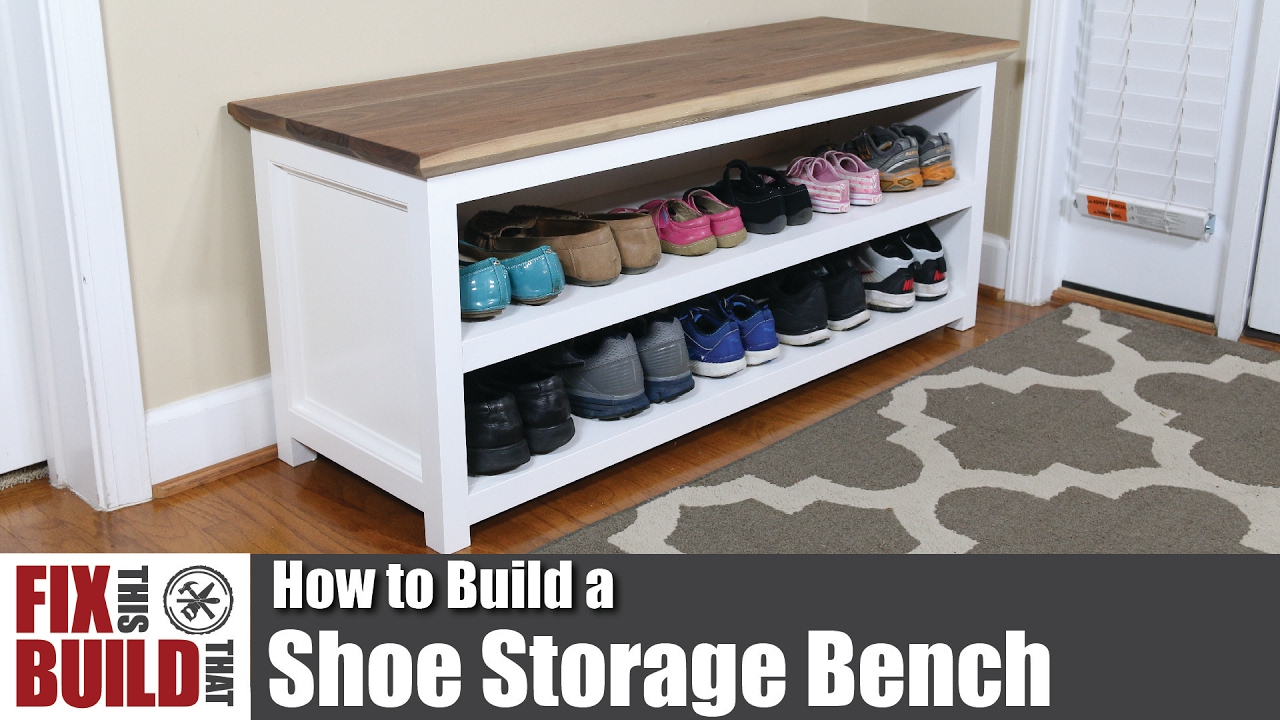
This DIY shoe storage bench is the perfect solution for keeping your entryway organized. With a painted base, adjustable shelf, and beautiful walnut top, it provides both style and function. Follow this step-by-step guide to build your own.
Materials:
- 2x2 lumber (for legs)
- 1x4 lumber (for side rails and shelf trim)
- 3/4-inch plywood (for side panels, shelves, and back)
- 1/4-inch plywood (for back panel)
- Walnut board (12 feet long for the top)
- Wood glue
- Pocket hole screws
- 2-part epoxy (for filling bug holes)
- Satin polyurethane finish
- Semi-gloss latex paint
- Sandpaper (150 and 220 grit)
- Cove molding (for side panel trim)
- Shelf pins (with holes for screws)
- Playing cards (for shimming)
Tools:
- Miter saw
- Table saw
- Pocket hole jig
- Drill/driver
- Jointer and planer (or pre-milled hardwood)
- Drum sander (optional)
- Orbital sander
- Clamps (bar clamps, spring clamps, F-clamps)
- Brad nailer
- Block plane
- Card scraper
- Forstner bit
- Twist bit
- Shelf pin jig
- Foam roller
Step-by-Step Guide
Cut the Legs and Create the Rabbets
Start by cutting your legs to size from 2x2 lumber. Since the bench will have a 1/4-inch plywood back, you need to cut a rabbet (recess) into the back legs to hold the plywood. Make one cut to define the depth of the rabbet, then raise the blade to match the leftover material and clear out the rest with a second cut. Don't worry if you go slightly deeper than needed—it won't affect the function.
Prepare the Side Rails
Cut 1x4s to length, then rip them down on the table saw to get two rails out of each piece (these will be 1x2). Drill pocket holes in the ends of all the rails.
Assemble the Side Panels
Cut your side panels to size from 3/4-inch plywood. Lay the legs and rails face down and secure the top rail with screws. Use the panels you just cut to position the lower rail—this eliminates any measurement errors and ensures an exact match. Secure the lower rails.
Attach the Panels to the Legs
Drill pocket holes in the sides of the panels to join the legs, and one hole on the top of the panel to attach the walnut seat later. Since 3/4-inch plywood isn't exactly 3/4 of an inch, use playing cards to shim the panels up and make them flush with the inside face of the legs. Lock everything in place with pocket screws.
Fill the Pocket Holes
Since the bench base will be painted, fill the pocket holes for a smooth surface. Cut dowel plugs at an angle so you can tap them in with a hammer—this works much better than trying to push them in by hand. After the glue dries, cut the plugs flush, then block plane and sand everything smooth. Add a small chamfer on the bottom of the legs to prevent chipping when the bench is slid around.
Drill Shelf Pin Holes
Use a shelf pin jig to drill adjustable shelf pin holes on both sides of the side panels. Sand the entire side assemblies to 150 grit.
Cut and Prepare the Shelves
Cut the lower shelf and adjustable shelf from 3/4-inch plywood. Each shelf will get a piece of trim on the front to hide the plywood edge. Cut 1x4 lumber to size on the miter saw, then rip it down on the table saw to get two 1x2 trim pieces. Use the trim to measure the crosscut on the lower shelf for an exact match.
Drive pocket holes along the front of the lower shelf to attach the trim and along the sides to attach the side assemblies. If your plywood is slightly warped, clamp it firmly to the work surface before attaching the trim with pocket screws.
Assemble the Base
Cut a back stretcher from plywood. Drill three large counterbore holes with a Forstner bit in the underside of the front and back stretchers, stopping 3/4 inch from the other side. Switch to a twist bit and drill a hole all the way through. Oversize these through holes to allow for wood movement later.
Use a makeshift clamping strip with F-clamps to pull the sides together. Attach the front and back stretchers, then flip the base over and attach the lower shelf. Use spring clamps to position the shelf, checking that the distance between the bottom of the shelf and the bottom of the legs is even all around. Secure with pocket screws.
Prepare the Adjustable Shelf
Cut the plywood for the adjustable shelf to width, factoring in the shelf pins. Cut a 1x4 to the same length, then rip it down to 1x2 size. Attach the trim the same way as before. Test fit the shelf.
Add Trim and Back Panel
Cut cove molding to miter around the inside of the side panels. Tack it in place with a pin nailer. Cut a back panel from 1/4-inch plywood.
Paint the Base
Sand everything to 150 grit. Apply three coats of semi-gloss latex paint. For the final two coats, use a foam roller instead of a nap roller for a much smoother finish.
Prepare the Walnut Top
Break down your walnut board into three 4-foot sections using the miter saw. Clean the boards to remove dirt and bark. Face join each board to get one smooth, flat side, then run them through the planer to flatten the other sides. Mill a flat edge on each board using the jointer, then rip them all to the same width on the table saw.
Glue Up the Top
Join the boards together using wood glue and plenty of clamps. Place a few small clamps on the glue joints at the ends of the boards to help keep everything aligned. Fill any bug holes with two-part epoxy using a popsicle stick.
Final Shaping and Sanding
After the epoxy dries, use a card scraper to smooth the repairs. Use a drum sander or orbital sander for final flattening. Cut the top to its final size on the miter saw.
Set the saw blade to 45 degrees and cut a bevel on the underside of the front edge to lighten the look and deal with bark voids. Turn the board and cut the side bevels. Use a block plane and card scraper to remove any burning from the cuts. Sand the entire top to 220 grit.
Apply Finish
Apply four coats of satin polyurethane. Thin the first two coats by 25%, and the final two coats 50/50 with mineral spirits.
Attach the Top
Position the top on the base with a consistent reveal around the front and sides. Clamp it down and secure it to the base through the oversized holes you drilled earlier in the stretchers. This allows for seasonal wood movement as the walnut expands and contracts.
Final Assembly
Flip the bench around and nail on the back panel with a brad nailer. Install the adjustable shelf using shelf pins that have holes in them. Secure the shelf with screws since it will see a lot of action from shoes going in and out.
Tips for Success
- Use playing cards for shimming – Since 3/4-inch plywood isn't exactly 3/4 inch, playing cards are perfect for making panels flush with the inside face of the legs.
- Cut angled dowel plugs – Instead of trying to push plugs in by hand, cut them at an angle so you can tap them in with a hammer. This is much easier and safer.
- Oversize screw holes for wood movement – When attaching the walnut top, drill oversized through holes to allow the wood to expand and contract with seasonal changes.
- Use a foam roller for paint – For the final coats of paint, switch to a foam roller instead of a nap roller for a much smoother, more professional finish.
- Thin your polyurethane – Thin the first two coats by 25% and the final two coats 50/50 with mineral spirits for a more durable and even finish.