What You'll Need
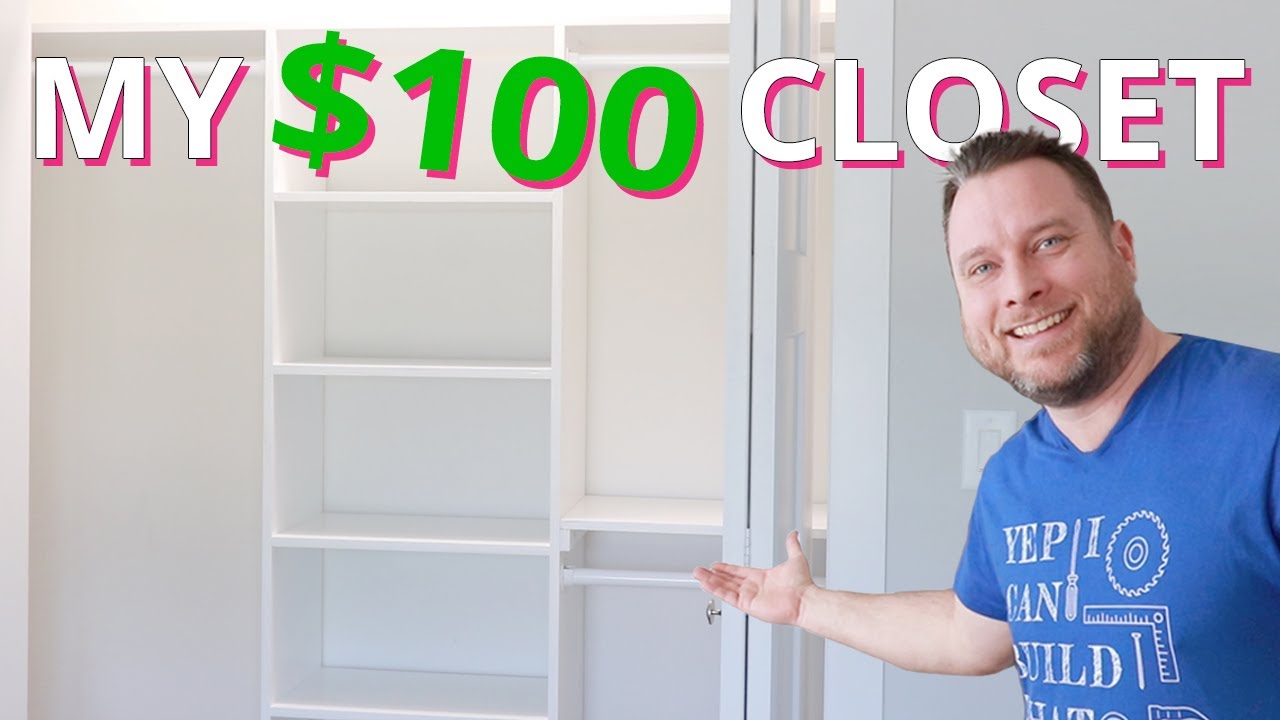
Ready to transform your closet into an organized, functional space? This tutorial will walk you through building a custom closet system with shelves in the middle, short hanging on one side, and tall hanging on the other—plus a removable shelf that grows with your wardrobe.
Materials:
- 1 sheet of 3/4-inch plywood (4×8 feet)
- Wood screws (1.25-inch and 2-inch)
- Liquid Nails construction adhesive
- Paint (your choice of color)
- 2 heavy-duty hanging rods (cut to size)
- 4 metal hanging rod sockets (white, heavy-duty)
- Edge banding (optional, for a cleaner look)
Tools:
- Table saw
- Miter saw
- Kreg Jig R3 (pocket hole jig)
- Clamps (at least 2)
- Drill/driver
- Paint roller and tray
- Paintbrush (for edges)
- Measuring tape
- Pencil
- Level
- Stud finder
- Sandpaper (medium grit)
Step-by-Step Guide
Step 1: Cut Your Plywood to Width
Start by cutting your 4×8 sheet of 3/4-inch plywood to your desired width on a table saw. For this project, the builder uses specific widths that work well in standard closets. If you need exact dimensions, download the plans linked in the original video description.
Step 2: Cut Shelves to Length
Using a miter saw, cut your plywood strips into the lengths needed for your shelves. Measure your closet space carefully before cutting.
Step 3: Paint All Boards
Before assembling, paint each board. Use a paint roller for the large flat surfaces:
- Paint one side and let it dry completely
- Flip the board over and paint the other side
- Let all pieces dry before moving to assembly
Step 4: Mark Shelf Positions
On your side panels, mark where each shelf will go. For this build, shelves are spaced every 12 inches. Important: Account for the 3/4-inch thickness of the shelves themselves. Measure from the top line, then mark a second line 3/4 inches below it. From that second line, measure another 12 inches. This prevents your shelves from being off by 3/4 inch all the way down.
Step 5: Create Pocket Holes
Using your Kreg Jig R3, drill pocket holes into the shelf boards. Set your jig for 3/4-inch material. These holes will allow you to screw the shelves into the side panels from underneath.
Step 6: Attach Shelves to One Side
- Line up the first shelf with your marked lines on one side panel
- Use a clamp to hold the shelf in place
- Set your drill clutch to around 11 (to prevent screws from going through the wood)
- Drive pocket hole screws through the shelf into the side panel
- Repeat for all shelves on this side
Step 7: Attach the Second Side Panel
Once all shelves are attached to one side, flip the assembly over and attach the second side panel using the same pocket hole technique. This completes the main shelf unit.
Step 8: Sand and Touch Up Paint
Sand the face of your assembled unit to smooth any rough edges. Use a hand brush to paint the edges and any areas where screws are visible. For a super clean look, use edge banding—a thin strip of wood with adhesive backing that you iron on.
Step 9: Install Wall Brackets for Top Shelf
Before installing the top piece, attach brackets to both ends of the shelf unit:
- Where there's no wall stud, use Liquid Nails construction adhesive to bond the bracket to the wall
- Use a temporary screw to hold it in place while the adhesive cures
- The adhesive provides plenty of strength to support weight on top of the shelf
Step 10: Install the Top Shelf
- Apply Liquid Nails to the top of your brackets
- Position the top shelf in place
- Screw through the top into the brackets on both ends
- Also screw down into the shelf unit in the middle for extra stability
Step 11: Install the Bottom Shelf
Install the bottom shelf that runs across the short hanging section. Use a small strip of wood as a support brace underneath.
Step 12: Install Hanging Rods
- Mark the positions for your hanging rod sockets
- Use a level to ensure they're aligned
- Screw the metal sockets into the side panels and center divider
- Insert the hanging rods
For this build, you'll need:
- One rod for short hanging (one side)
- One rod for tall hanging (other side)
- One rod for the lower short hanging section
Tips for Success
- Measure twice, cut once. When marking shelf positions, always account for the 3/4-inch thickness of the material to avoid cumulative errors.
- Use a clamp when driving pocket hole screws. This keeps the shelf perfectly aligned and prevents shifting during assembly.
- Let Liquid Nails cure fully. Construction adhesive needs time to set before it can bear weight. Follow the manufacturer's instructions for cure time.
- Paint before assembly. It's much easier to get a clean finish on individual boards than on an assembled unit. Just touch up the edges afterward.
- Use heavy-duty metal rod sockets. Plastic sockets can crack over time. Metal ones are more durable and will last for years.