What You'll Need
I've been cooking with sous vide for a while now, and I want to show you three ways to use it that'll make you wonder why you didn't try this sooner. If you've been hearing about sous vide and wondering if it's worth the hype — it is. Here's what you need to know to get started.
- A sous vide immersion circulator
- A deep pot or basin
- Zip-top freezer bags (gallon size works for most things)
- Olive oil
- Salt and pepper
- Your protein of choice (fish, eggs, steak)
What Is Sous Vide, Really?
Sous vide is French for "under vacuum." You cook food in sealed bags submerged in water. But the real magic isn't the bag — it's the temperature control. The device heats the water to exactly the temp you set, and it stays there. No guessing. No overcooking.
Step 1: Sous Vide Fish (Halibut)
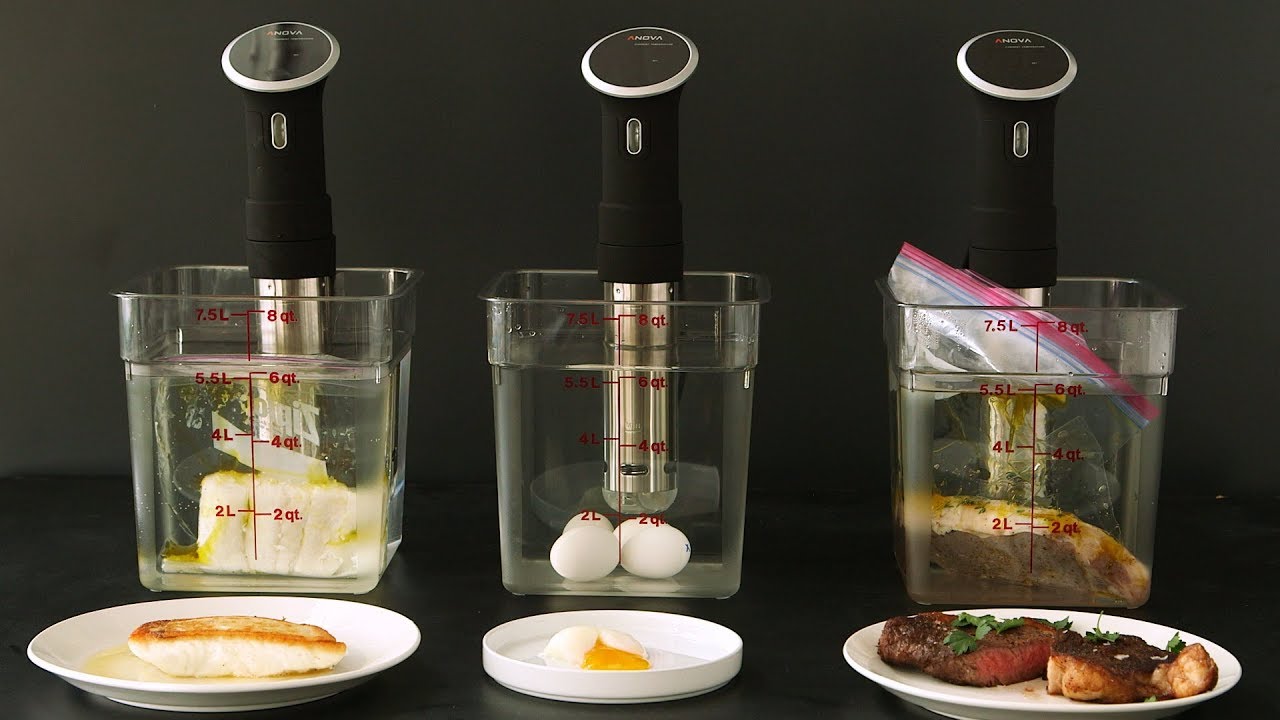
I'm using a 6-ounce halibut fillet, about an inch thick. Set your sous vide to 123°F. This gives you tender, flaky fish every time.
Prep the fish:
- Drizzle with olive oil and season with salt
- Add lemon slices or fresh herbs to the bag if you want extra flavor
- Add a little extra oil to the bag so the fish doesn't stick
- Press out as much air as possible before sealing — the bag needs to stay submerged
Cook for 45 minutes.
Finish it: After cooking, sear the fish skin-side down in a hot pan with butter for about a minute. You'll get crispy skin with that perfectly cooked interior.
Step 2: Sous Vide Eggs (Soft Poached)
Eggs have their own built-in "vessel," so no bag needed. Set your water to 147°F. Eggs fully cook at 160°F, so this lower temp gives you that silky, custard-like texture.
Cook for 45 minutes, then crack directly into a bowl. The white will be soft and the yolk will be creamy — almost like a poached egg but softer.
What happens if you leave them longer? I left one in for 2 hours. The white stayed the same, but the yolk got thicker and creamier. The fat in the yolk gels over time. Not a mistake — just a different texture.
Step 3: Sous Vide Steak (Strip Steak)
This is where sous vide really shines. I'm using a 16-ounce strip steak, about an inch thick. Set your sous vide to 140°F for medium-rare.
Prep the steak:
- Season with salt, pepper, and olive oil
- Add thyme, rosemary, or peeled garlic cloves to the bag
- Press out the air and seal
Cook for 1 to 2 hours.
Finish it:
- Heat a skillet with a little olive oil on high
- Sear the steak for 1 to 1.5 minutes per side
- In the last 30 seconds, add butter and fresh herbs to the pan
- Spoon the browned butter over the steak as it finishes
- Let it rest a few minutes before slicing
The inside will be perfectly rosy pink from edge to edge. If you want it rarer, drop the temp to 129°F.
Temperature Guide for Other Proteins
- Chicken breasts: 149-150°F
- Chicken thighs: 165°F or higher (more connective tissue means they handle higher temps well)
A Few Tips
- Check the max and min water lines on your device before filling
- Use the manufacturer's website or app for time and temperature guides — most companies have great resources
- You can clip bags to the side of your pot, but good seals keep them submerged on their own
Sous vide takes the fear out of cooking. No more dry chicken or overdone steak. Pick a device, do a little research, and give it a shot.