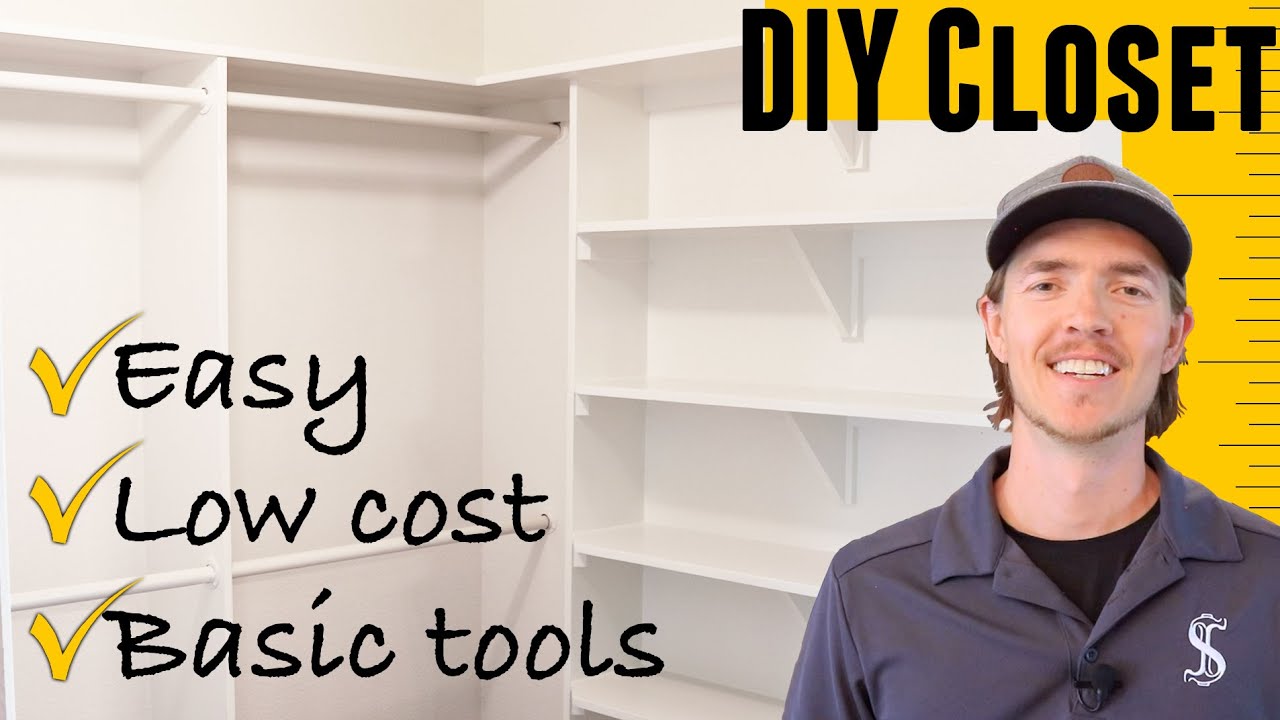
Build a Custom Closet with Basic Tools
Of course! Here is the DIY tutorial based on the provided transcript.
Want a professional-looking custom closet without the professional price tag? This guide will show you how to build one using affordable MDF and basic tools. It's a simple, effective project that can transform a messy space into an organized, stylish storage area.
What You'll Need
Materials:
- 3/4-inch MDF (Medium-Density Fiberboard) sheets (4x8 feet, $30-$40 each)
- 2-inch brad nails or 2-inch screws
- Wood glue (optional, for extra support)
- Oil-based or water-based primer
- Paint (latex or acrylic)
- Caulk (for a finished look)
- Closet rods and brackets (available at any home store)
Tools:
- Table saw or circular saw
- Miter saw (optional, for cutting supports to length)
- Straight piece of wood (for use as a guide with a circular saw)
- Clamps
- Level
- Stud finder
- Tape measure
- Pencil
- Brad nailer or drill/driver
- Sandpaper (180 or 220 grit)
- Paint roller and tray
- Paintbrush (for cutting in)
- Safety glasses and dust mask
Step-by-Step Guide
Step 1: Plan and Measure Your Closet
Before you buy any materials, careful planning is essential. This is the most time-consuming but most important step.
- Measure the space: Carefully measure the width and height of each wall in your closet and write down the measurements. Note any irregular features like outlets, light switches, or sloped ceilings.
- Sketch a diagram: Draw a simple diagram of your closet on a piece of paper. Use this to sketch out your design, figuring out where you want shelves, hanging rods, and storage for larger items like laundry baskets or shoe racks.
- Determine your needs: Figure out how much total hanging rod space you need for your clothes. A common setup is one rod at 44 inches off the ground and another 36 inches above that.
- Add shelves: With the remaining space, add as much shelving as possible. For this project, 12-inch deep shelves spaced 12 inches apart vertically worked perfectly.
- Create a cut list: Once your design is finalized, create a detailed cut list specifying the exact dimensions of every piece. This will save you time and prevent mistakes later.
Step 2: Cut Your MDF
MDF is one of the easiest materials to cut. You can use a table saw or a circular saw with a straight guide.
- Cut the shelves: Cut your MDF sheets into shelves of your desired width. For this project, 12-inch wide shelves were used.
- Cut the shelf supports: Cut strips of MDF to use as shelf supports instead of brackets. These should be at least 2 inches wide. You can go wider if you plan to mount anything to them.
- Cut supports to length: Use a miter saw to cut the shelf supports to the exact length needed for your closet walls.
- Sand the edges: Once all pieces are cut, sand any sharp corners with 180 or 220 grit sandpaper to soften them. Dust off the pieces afterward.
Step 3: Paint the Shelves
Painting the shelves before installation reduces fumes in your home and is easier with basic tools like a paint roller.
- Set up and clean: Lay out all your cut pieces in a well-ventilated area and make sure they are clean and dust-free.
- Apply primer (first side): Apply one coat of primer. For the smoothest finish, use an oil-based primer. If you use a water-based primer, you will need to sand the shelves after it dries because the water will raise the wood fibers.
- Paint (first side): After the primer dries, apply your first coat of paint.
- Flip and repeat: Once the first side is dry, flip the pieces over and repeat the primer and paint process.
- Second coat (optional): For a more durable finish, apply a second coat of paint. For a closet, one coat is often sufficient.
- Sand (if using water-based primer): If you used a water-based primer, lightly sand the tops of the shelves (the parts you want to be smooth) before applying the final coat of paint.
Step 4: Prepare the Closet
While the paint is drying, prepare the closet for installation.
- Remove old fixtures: Take down any old shelves, rods, or brackets.
- Patch holes: Fill any holes in the walls from previous fixtures with spackle or wood filler.
- Paint the walls (optional): Apply a fresh coat of paint to the closet walls. This is a good time to do it, and you can use the same color as your new shelves for a seamless look.
Step 5: Install the Shelf Supports
This is where your planning pays off.
- Draw level lines: Use a level to draw horizontal lines on the wall where you want the bottom of each shelf support to sit.
- Find the studs: Use a stud finder to locate and mark the center of each stud in your closet walls. Use a level to draw a vertical line down the wall through each mark.
- Nail the supports: Use a brad nailer with 2-inch nails to attach the shelf supports to the wall, following the lines you drew. Use three nails per stud location for a secure hold.
- No nailer? You can use 2-inch screws and a drill instead. Just pre-drill a small pilot hole to prevent the MDF from splitting.
Step 6: Install the Shelves
- Place the shelves: Set your painted shelves on top of the installed supports.
- Make adjustments: You may need to make a few final cuts to ensure a perfect fit, especially in corners or around baseboards.
- Secure the shelves: Nail or screw the shelves to the supports from above to keep them in place.
- Install vertical dividers (optional): If your design calls for vertical boards to separate sections, cut them to size and install them, ensuring they don't rest directly on carpet (cut the carpet and baseboard away as needed).
Step 7: Finish and Install Rods
- Caulk the edges (optional but recommended): For a truly professional, finished look, apply a thin bead of caulk along all the edges where the shelves meet the wall. Smooth it with your finger and wipe away any excess.
- Paint over caulk and nails: Once the caulk is dry, touch up the paint over the caulked areas and any visible nail heads.
- Install closet rods: Cut your closet rods to the correct length and install them using the brackets you purchased.
Tips for Success
- Plan, plan, plan: The planning stage is the most critical. A detailed diagram and cut list will save you time, money, and frustration.
- Use a level constantly: Don't trust your eye. A level is your best friend for ensuring your shelves are straight and your closet looks professional.
- Don't rush the process: This project can be done in a couple of full days, but it's more enjoyable if you take your time. Work a few hours at a time and make an art out of it.
- Consider using a paint sprayer: If you have access to one, painting the shelves after they are installed with a paint sprayer is much faster and gives a flawless finish with less clean-up.
- Safety first: Always wear safety glasses and a dust mask when cutting MDF, as the dust can be irritating.
FAQ
Q: Can I use regular plywood instead of MDF?
A: Yes, you can. MDF is cheaper, has a smoother surface for painting, and is very easy to cut without splintering. Plywood is stronger and more moisture-resistant but can be more expensive and harder to get a perfect painted finish on.
Q: Do I have to use a brad nailer, or can I use screws?
A: You can absolutely use screws. A brad nailer is faster and leaves smaller holes to fill, but screws are just as effective. Just be sure to pre-drill pilot holes to prevent the MDF from cracking.
Q: My closet walls aren't perfectly square. What should I do?
A: This is very common. Don't cut all your shelves to the exact wall measurement. Cut them slightly long and then trim them to fit perfectly during installation. A little bit of caulk can also hide small gaps.
Q: How do I clean and maintain MDF shelves?
A: MDF is durable but can be damaged by moisture. Wipe them down with a slightly damp (not wet) cloth. Avoid using harsh chemicals or abrasive cleaners, as they can damage the paint finish.