What You'll Need
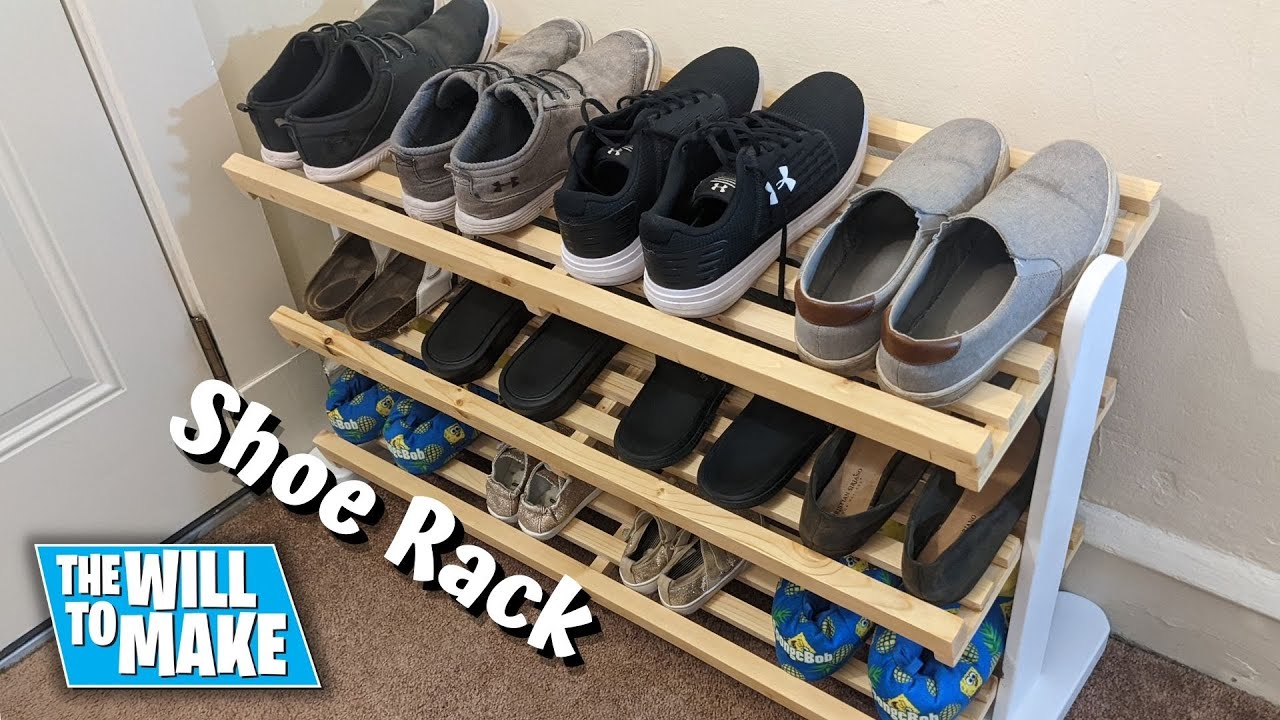
This tutorial will show you how to build a beautiful, sturdy wooden shoe rack that keeps your entryway organized and clutter-free. With angled shelves and a classic design, this project is perfect for beginners who want to improve their woodworking skills.
Materials:
- 2x4 lumber (for feet)
- 1x4 lumber (for legs, shelf supports, slats, and front lips)
- Wood glue
- Wood screws (various sizes)
- Spray polyurethane (clear finish)
- White paint (for legs)
- Sandpaper (120 grit and finer)
- Wood filler or sawdust and glue mixture
Tools:
- Miter saw or circular saw
- Table saw
- Bandsaw or jigsaw
- Scroll saw (optional, for notches)
- Drill press or handheld drill
- Forstner bit (slightly larger than screw heads)
- Countersink bit
- Phillips screwdriver
- Speed square
- Clamps
- Sanding block or orbital sander
- Spray gun or spray can for finishing
Step-by-Step Guide
Step 1: Cut the Legs and Feet
Start by cutting two pieces of 2x4 for the feet and two pieces of 1x4 for the legs. Measure and mark where the notches need to be cut in the feet so the legs can slide inside them. Drill through the center of each notch to allow your scroll saw blade to pass through, then carefully cut the notches. Stay close to your marked lines for a tight fit.
Step 2: Shape the Legs and Feet
Use the lid of a bowl to mark curved edges on the tops of both legs and feet. Cut these curves using a bandsaw or jigsaw. Sand everything down to 120 grit before assembly to save time later.
Step 3: Assemble the Legs
Mark the center of each foot and drill two holes on each side for screws. Use a Phillips screwdriver to create a starting point, then drill with a Forstner bit slightly larger than your screw heads, about 1 inch deep. Apply wood glue to the notches, insert the legs, and secure with screws. Use a speed square to make sure the legs are perfectly straight.
Step 4: Cut Shelf Supports and Slats
Using a miter saw, cut three pieces of 1x4 lumber. Split each into three pieces to get nine shelf supports. Then cut eight more 1x4 pieces and split each into three to get 24 slats.
Step 5: Prepare the Wood Pieces
Run all pieces through the table saw to clean up one edge. Cut the nine shelf supports to 3/4 inch width and the 24 slats to 1 inch width. Sand the edges by hand to remove sharpness.
Step 6: Mark and Drill Holes
Lay out the nine shelf supports and mark where slats will go, spacing them 1 inch apart. Drill a hole in the center of each mark. For six of the supports, drill two additional holes through the side for attaching to the legs. Use a countersink bit on all holes so screw heads sit below the surface.
Step 7: Assemble the Shelves
Place one slat flat and screw a support board down to it. Add another slat on the opposite side. Use a speed square to ensure the shelf is square, then screw down the remaining slats. Add the center support board. Use clamps for any boards that have twisted slightly.
Step 8: Add Front Lips
Mark and drill holes through the bottom of each shelf for attaching the front lip. Countersink these holes, then apply glue and screw the front lip into place. Use clamps to keep the lip flush with the front board. Fill any gaps with a mixture of wood glue and sawdust.
Step 9: Sand and Finish
Sand the front of each shelf flat after the glue dries. Sand all harsh edges. Apply multiple coats of spray polyurethane, focusing extra coats on the front where shoes will rub. Wipe dust from the legs and apply two coats of white paint.
Step 10: Final Assembly
Mark on each leg where the bottom of each shelf will sit. Make front marks about 1 inch lower than the back to create a slant. Place the bottom shelf in position and screw it to one leg, then flip and screw to the other leg. Repeat for the second shelf, using a long clamp to hold the legs together while you adjust and secure it. Install the top shelf the same way.
Tips for Success
- Sand before cutting small pieces – Sanding larger boards is much easier than sanding small slats after cutting.
- Check for square constantly – Use a speed square at every assembly step to ensure your shelves and legs are straight.
- Pre-drill all holes – This prevents wood from splitting and keeps screws from wandering off course.
- Use clamps for warped boards – Even slightly twisted boards can be clamped flat during assembly for a better fit.
- Apply extra finish to front edges – These areas get the most wear and dirt, so multiple coats of polyurethane will protect them longer.