What You'll Need
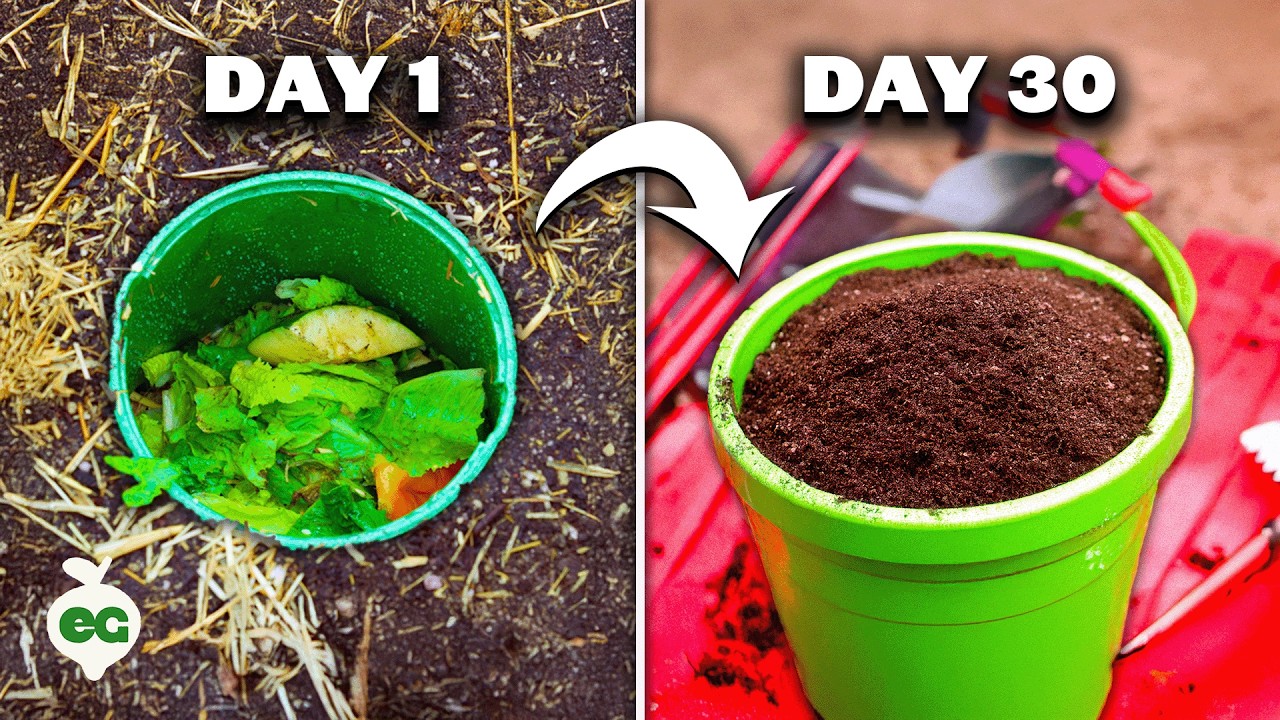
If you're still throwing kitchen scraps in the trash, stop. As a gardener, lots of what I grow never even makes it into the kitchen — it goes straight to the compost pile because it's the parts you don't eat. But even the good stuff you bring inside? Way too much of it ends up in a landfill.
Here are seven ways to use those scraps to make your garden grow better.
- Shovel
- 2-gallon bucket with lid (or irrigation valve box)
- Drill with ¼-inch bit
- Kitchen scraps
- Brown materials (shredded paper, cardboard, straw, wood chips)
- Optional: Bokashi bucket, countertop composter, chickens
1. Bury Them Directly
Grab a shovel, dig about a foot down, and bury your scraps. That's it. No breaking them down first, no fancy setup.
Last year we ran an experiment where we planted tomatoes over six different types of buried food scraps. They all worked, some better than others. The secret? The finer you chop the scraps before burying them, and the longer you let them break down before planting, the better. You're giving bacteria, fungi, and insects time to turn that stuff into food your plants can actually use.
2. Build a Worm Tower
Worms are composting machines. If you don't want a whole compost bin, try a worm tower — it's just a container buried in the ground that you drop scraps into.
Two options:
Option A: Buy an irrigation valve box from any hardware store. It has a built-in lid. Bury it, add scraps, done. The downside is the open bottom — soil can work its way up and clog things.
Option B: Get a 2-gallon bucket and drill ¼-inch holes all over it. This gives worms more entry points, and the solid bottom keeps soil out. Drill one slightly bigger hole on the bottom for drainage. Make sure it has a lid so the worms don't cook in the sun.
Bury it in your garden, layer in browns (shredded paper, cardboard, straw) and food scraps, and the worms do the rest. They eat the scraps, crawl through your garden beds, and leave fertilizer everywhere.
3. Use a Countertop Composter
If you live in an apartment or don't have outdoor space, an electric countertop composter like the Lomi works. It dries and grinds scraps into a fine powder you can add to soil. It breaks down fast — think of it as hyper-speeding up the burying method from tip #1.
These can get pricey, and they don't handle huge volumes well. But for daily kitchen scraps from a small household? They're handy.
4. Try Bokashi Fermentation
This one's different — it's fermentation, not composting. But it handles anything: meat, cheese, dairy, pasta. All of it.
Bokashi is anaerobic — no oxygen. You need an airtight bucket. Add your scraps, sprinkle on the Bokashi bran (that's where the bacteria live), and press everything down with the lid. Leave it for two weeks.
What comes out smells like pickles, not garbage. The scraps look mostly the same but they're pre-broken down and will decompose in your garden way faster than raw scraps. You can dig it in or add it to a compost pile.
Bonus: There's a tap at the bottom that drains "Bokashi tea" — dilute it and use it as liquid fertilizer.
5. Feed Chickens
If you have hens, kitchen scraps are gold. It adds variety to their diet and keeps them entertained. They'll eat most things and leave what they don't want.
The real win? Chickens convert scraps into eggs and manure. That manure, mixed with their bedding, gets cleaned out every few months and goes into your compost system. Chicken manure superheats a compost pile and breaks everything down faster.
6. Build a Compost Pile
The classic method. Get a bin system — I use two that are 3x3 feet, big enough to get hot. Layer green materials (kitchen scraps, garden trimmings) with brown materials (wood chips, dead leaves, cardboard). Keep adding until the pile is big enough to heat up.
Mine sits at 115°F right now, which is plenty hot for breaking down material fast. This is the best option if you have a big garden and generate a lot of waste.
7. Regrow Them
The best way to get rid of kitchen scraps? Don't get rid of them. Regrow them. Not everything regrows equally well, but some scraps will give you a second harvest with almost no effort.